

Black Cumin Seed for Horses: Benefits, Research, and How to Feed It
By Tristan, Co-Owner of Headley Holistics | B.S., Exercise Physiology | 15+ years in health & wellness | Published August 2026
Quick summary: Black cumin seed (Nigella sativa) is a whole-food superfood supplement for horses, valued for improving skin, coat, and hoof quality, supporting the immune system, offering a mild calming effect, and working as a natural feed-through fly repellent. Those benefits trace to its phytonutrients — thymoquinone, thymohydroquinone, and thymol. At Headley Holistics, we feed it as an organic, human-grade black cumin seed press cake: the whole seed, cold-pressed, so your horse gets the full nutrient package in a form the gut can actually absorb.
New to black cumin and wondering if it's even safe to feed? Start with can horses eat black cumin, then come back here for the full benefits and science. Want the quick-hit version? See our top 10 things to know about black cumin seed for horses.
In this article
- What is black cumin seed, and why feed it to horses?
- What are the benefits of black cumin seed for horses?
- What is the science behind black cumin seed?
- Black cumin seed press cake vs. black cumin seed oil for horses
- How much black cumin seed should you feed a horse?
- Is black cumin seed safe for horses?
- Does black cumin work for other animals?
- Why choose Headley Holistics black cumin seed press cake?
- Frequently asked questions
- Related reading
- References
What is black cumin seed, and why feed it to horses?
Black cumin seed comes from the plant Nigella sativa — also called black seed, kalonji, or black caraway. It is not related to culinary cumin.
People have used black cumin for over two thousand years, dating back to ancient Egypt and Greece. Today it is one of the most-researched medicinal plants in the world.
For horses, black cumin is a true whole-food superfood. The seed is naturally rich in protein, fiber, healthy fats, B vitamins, and minerals — plus a set of active phytonutrients that do the heavy lifting: thymoquinone, thymohydroquinone, and thymol.
That combination is why black cumin seed for horses has become a go-to holistic supplement for coat, skin, hoof, immune, and calming support — all from one ingredient.
What are the benefits of black cumin seed for horses?
Black cumin seed is unusual because a single whole food touches so many systems at once. Here is what it supports, and the mechanism behind each.
Shinier coat, healthier skin, and stronger hooves
This is the benefit owners notice first. Black cumin delivers the fatty acids, protein, and minerals that skin, hair, and hoof tissue are built from — alongside anti-inflammatory and antioxidant phytonutrients that calm reactive skin. Most owners report a visibly shinier coat and better hoof quality within a couple of months of daily feeding.
Natural feed-through fly and pest control
Black cumin works as a natural fly repellent through two real mechanisms. First, its aromatic oils are carried out through the horse's skin and coat, making the horse less appealing to biting flies. Second, those same compounds pass into the manure, where they act as a larvicide that disrupts fly breeding [1][2].
The active compounds also show documented activity against other pests. Thymol and carvacrol repel and kill ticks — including cattle ticks and the blacklegged (deer) tick [3][4] — and are toxic to horse flies [5]. Reassuringly for pasture health, those same compounds tested non-toxic to dung beetles, unlike chemical dewormers such as ivermectin [6].
Immune system support
Thymoquinone is a well-studied immune modulator with antimicrobial and antioxidant activity. Rather than wiping out the gut indiscriminately, black cumin tends to target harmful bacteria while sparing beneficial ones — in poultry, for example, it reduced E. coli while supporting overall health [7]. It also has documented antihistamine activity through a compound called nigellone, which is part of why it helps horses with allergic and reactive conditions [8].
A mild, natural calming effect
Black cumin offers gentle, daily calming support — not sedation. Thymoquinone has documented anti-anxiety activity through the GABA system, the same pathway many calming aids target [9]. Fed consistently, owners often describe their horse as simply more comfortable and settled in its own skin.
Respiratory and airway support
For horses prone to airway irritation, black cumin is worth knowing about. In human research, black seed has shown bronchodilator and anti-asthmatic effects [10] — a mechanism that helps explain why it is used to support horses with heaves and seasonal airway reactivity.
Whole-food gut and metabolic nutrition
Underneath all of it, black cumin is real food. It feeds the gut instead of taxing it, and it delivers its nutrients in the natural, bioavailable forms a horse's body recognizes — the opposite of the synthetic, poorly absorbed isolates in many fortified feeds.
Want to try it with your own horse?
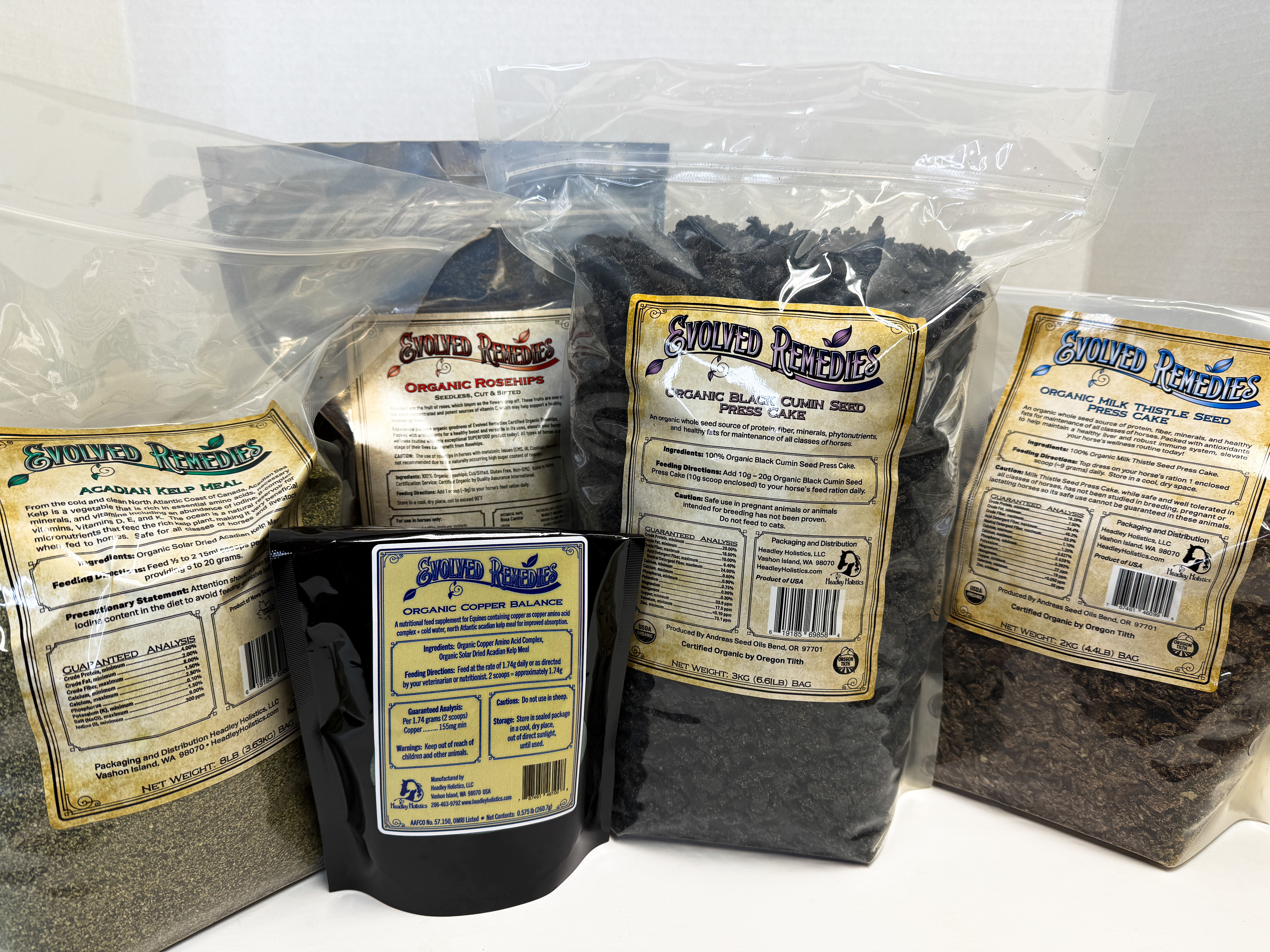
The easiest place to start is our 2-week sample of Organic Black Cumin Seed Press Cake — a low-cost way to see how your horse responds. First order ships free.
Start with the 2-week sample →What is the science behind black cumin seed?
Almost every benefit above traces back to the same small group of phytonutrients, led by thymoquinone. Thymoquinone is one of the most-studied plant compounds in modern research, with documented antioxidant, anti-inflammatory, antimicrobial, antihistamine, and immune-modulating activity.
Alongside it, thymohydroquinone and thymol add antimicrobial and pest-repellent power. Together, these aromatic compounds are why one seed can support so many different systems.
It is worth being honest about the state of the evidence: much of the deepest research on Nigella sativa has been done in humans and other species rather than in controlled equine trials. But the mechanisms are real and well-documented, the compounds are the same across species, and the results horse owners see in the field line up cleanly with what the science predicts.
Black cumin seed press cake vs. black cumin seed oil for horses
If you have searched for black cumin seed oil for horses, here is the distinction that matters — and why we chose press cake.
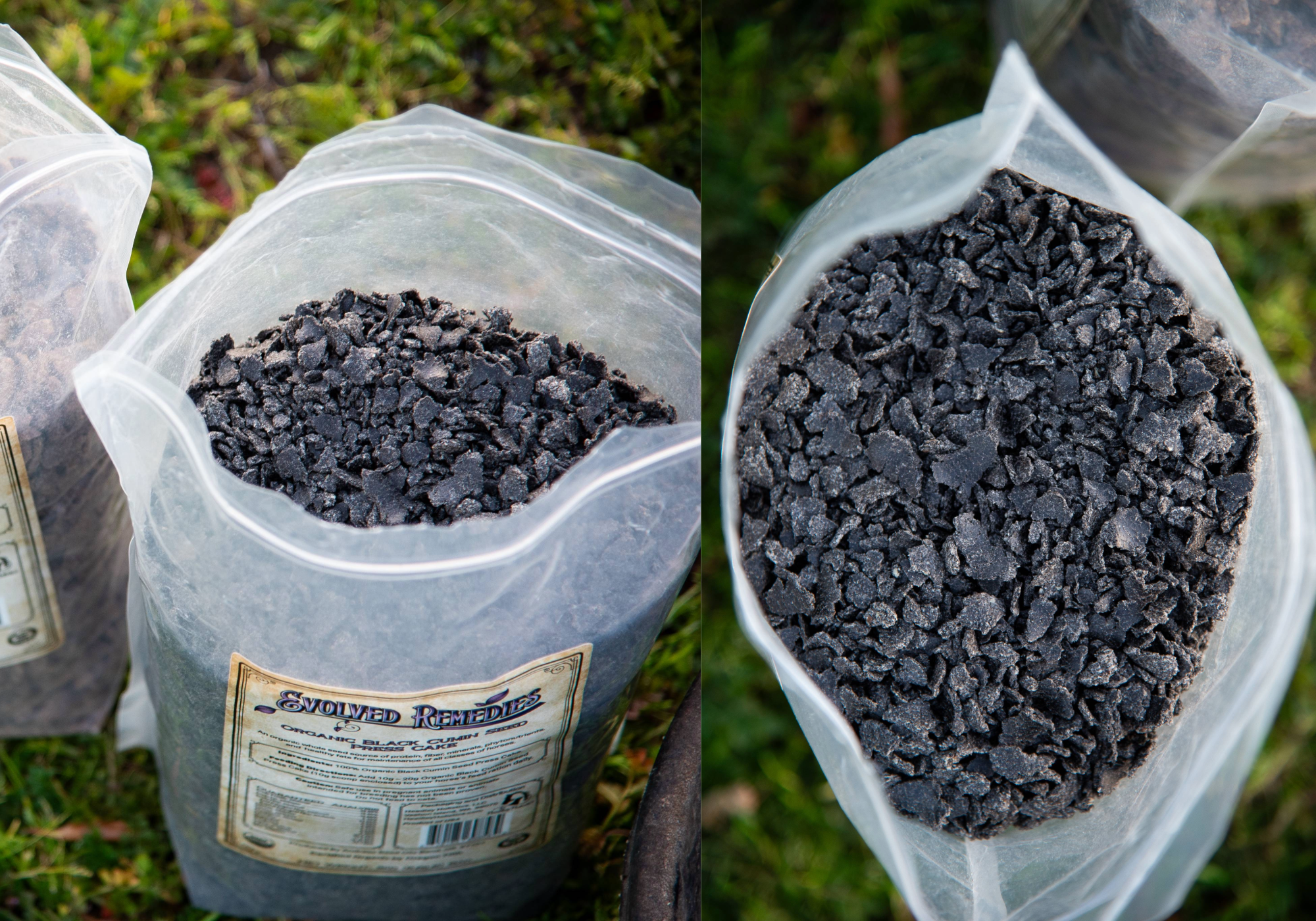
When black cumin seeds are cold-pressed, they separate into two parts: the oil (a highly concentrated fat fraction) and the press cake (the seed solids — protein, fiber, minerals, and phytonutrients, along with a healthy portion of the seed's natural oil that stays behind). So press cake still gives your horse plenty of black cumin's beneficial fats — just not in a concentrated slug.
That difference matters more than it sounds, because of how a horse digests fat. Horses don't have a gallbladder. Instead of storing bile and releasing a big burst to break down a heavy dose of oil, a horse's liver drips bile continuously — an adaptation for a grazing animal, not for large fatty meals. As a result, horses struggle to break down and use large amounts of oil all at once.
Press cake sidesteps that problem. It delivers a moderate, digestible amount of fat inside the whole-food matrix — the way a horse's gut is actually built to handle it — together with the protein, fiber, minerals, and phytonutrients that a concentrated oil leaves behind. It also mixes easily into feed and is far more economical per serving. For horses, whole-seed press cake is the more complete and more digestible choice.
| Black cumin seed press cake | Black cumin seed oil | |
|---|---|---|
| What it is | The whole seed, cold-pressed (solids + retained oil) | Only the extracted fat fraction |
| Fat / oil | A moderate, digestible amount | Highly concentrated |
| Also provides | Protein, fiber, minerals & phytonutrients | Some phytonutrients |
| Whole-food matrix | Yes — supports absorption | No |
| Suits equine digestion | Yes — easy on a gallbladder-free gut | Harder for horses to process in quantity |
How much black cumin seed should you feed a horse?
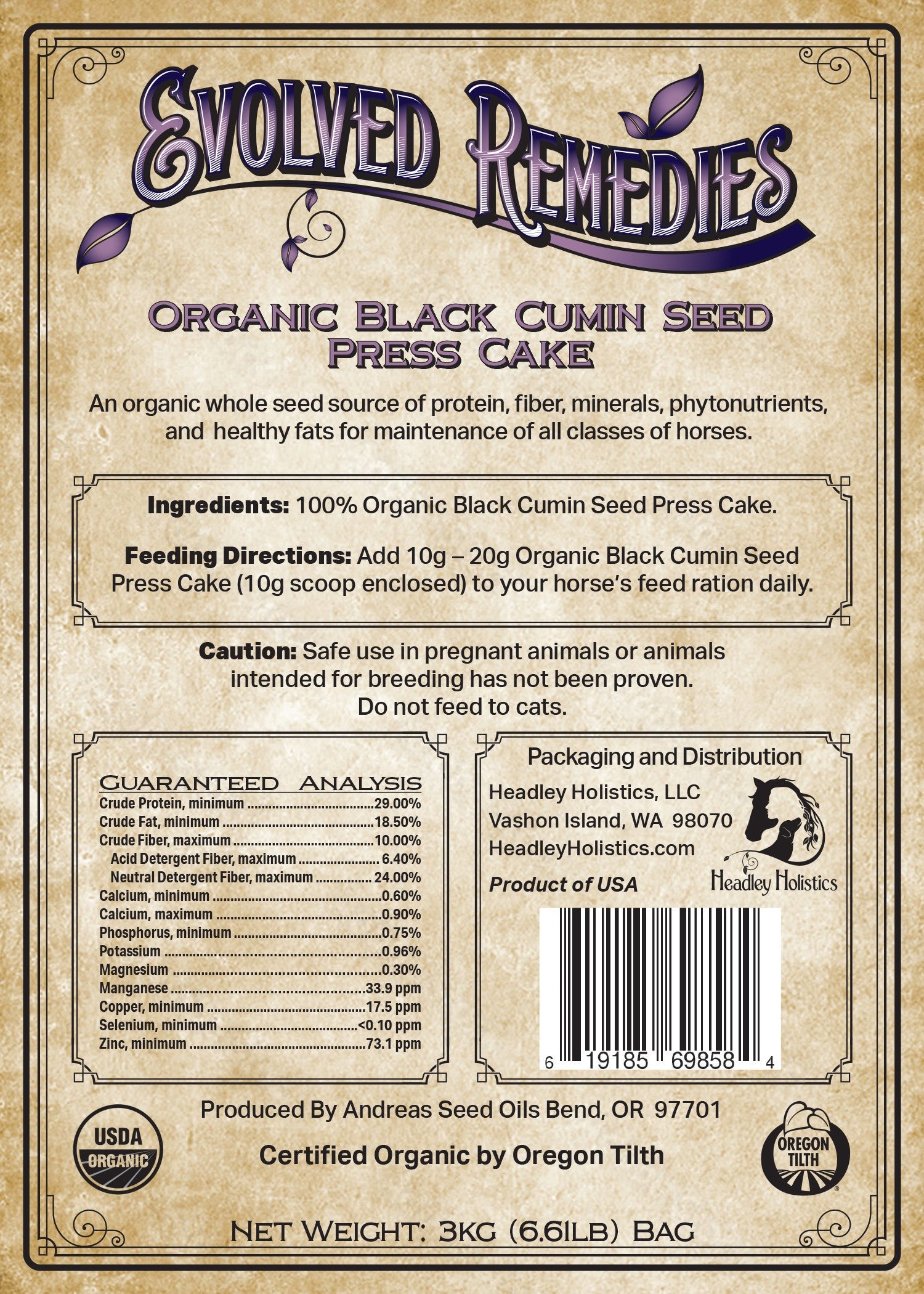
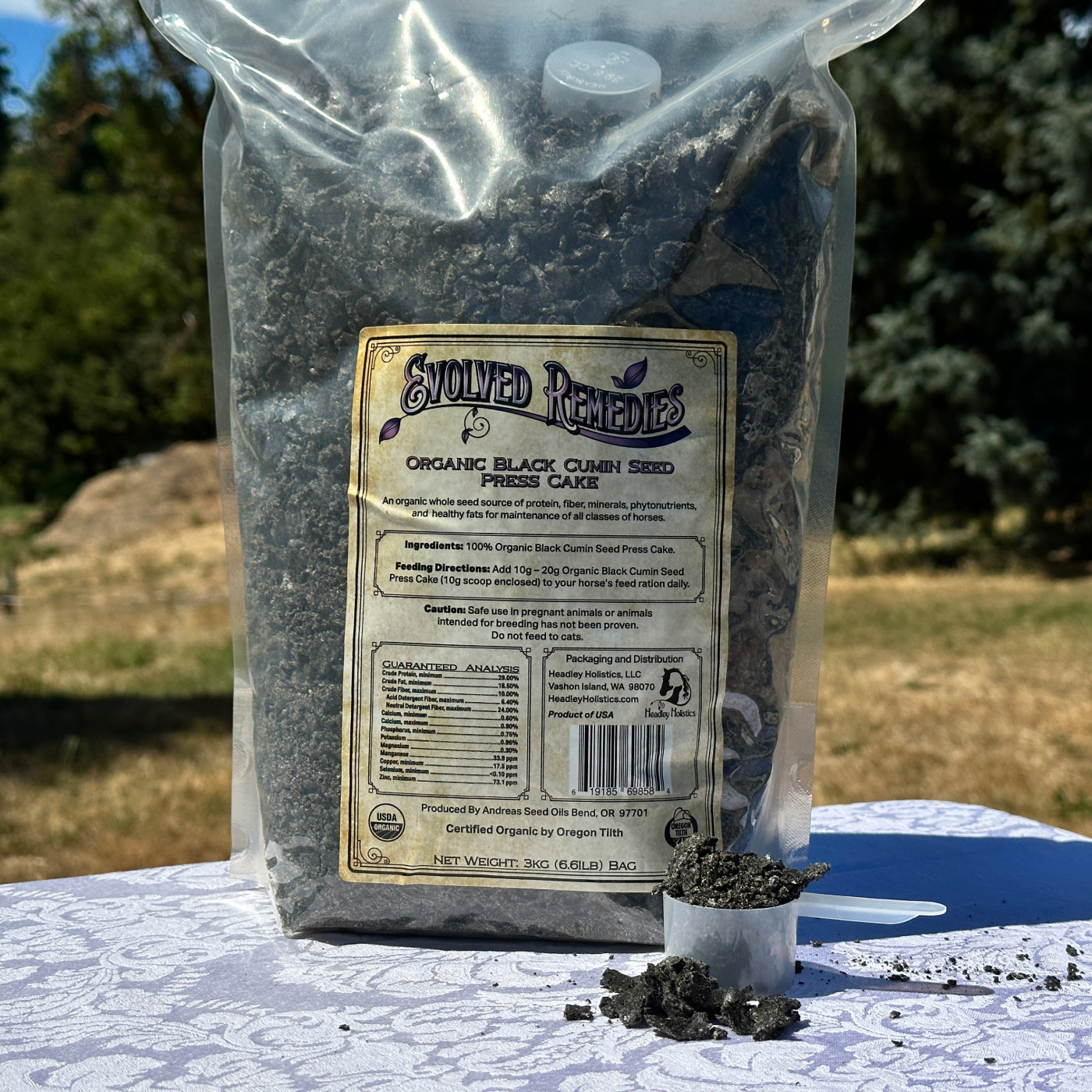
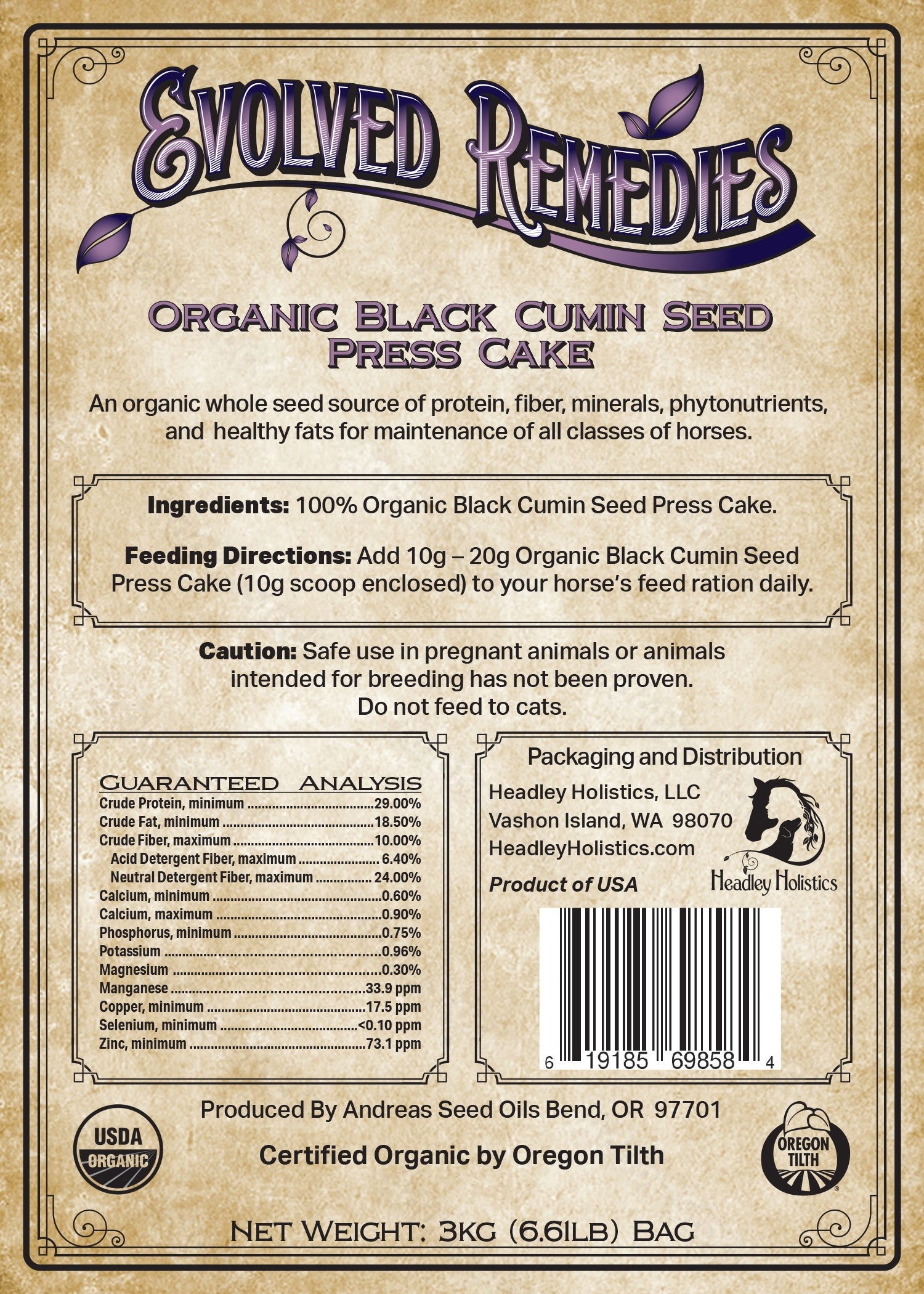
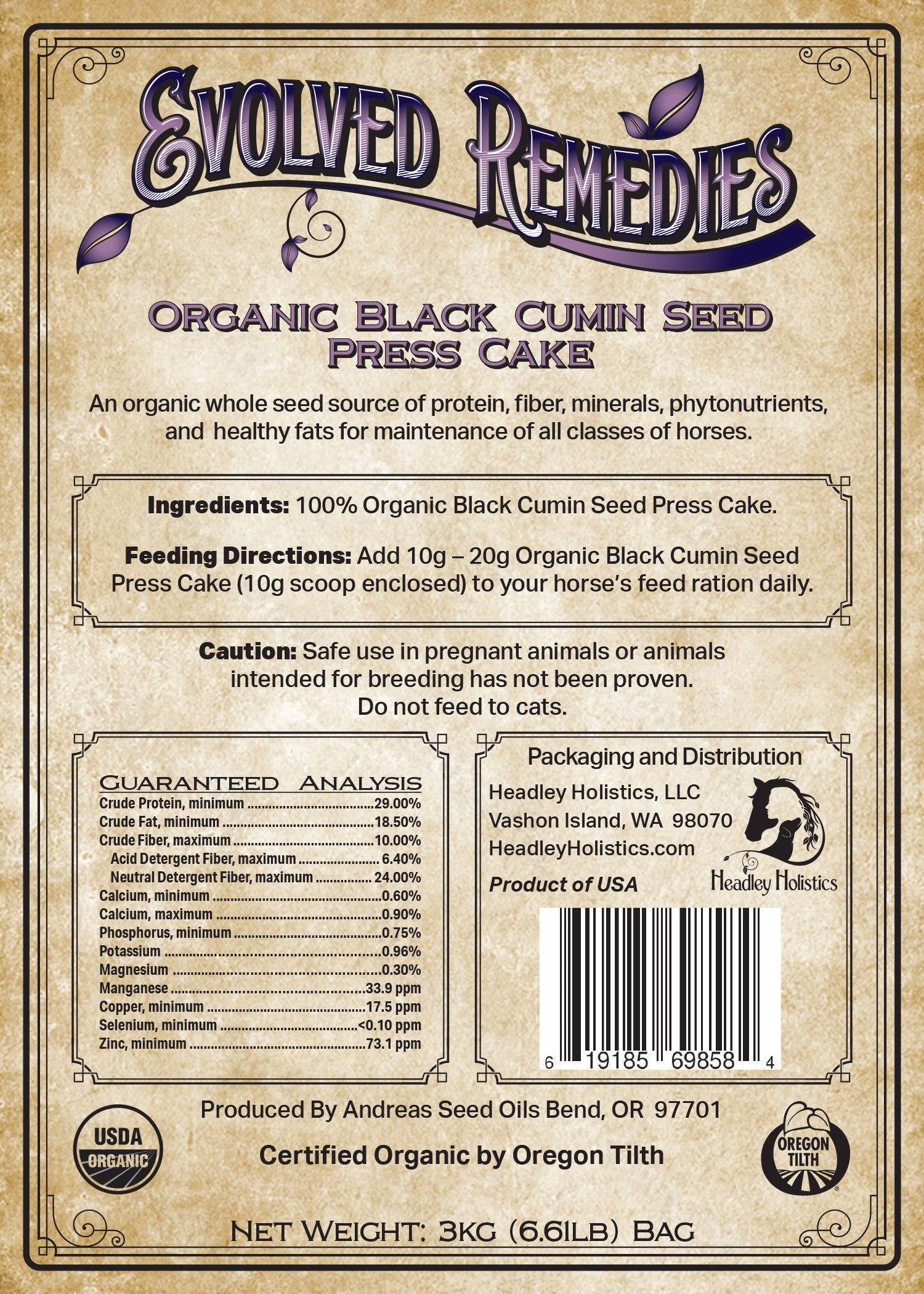
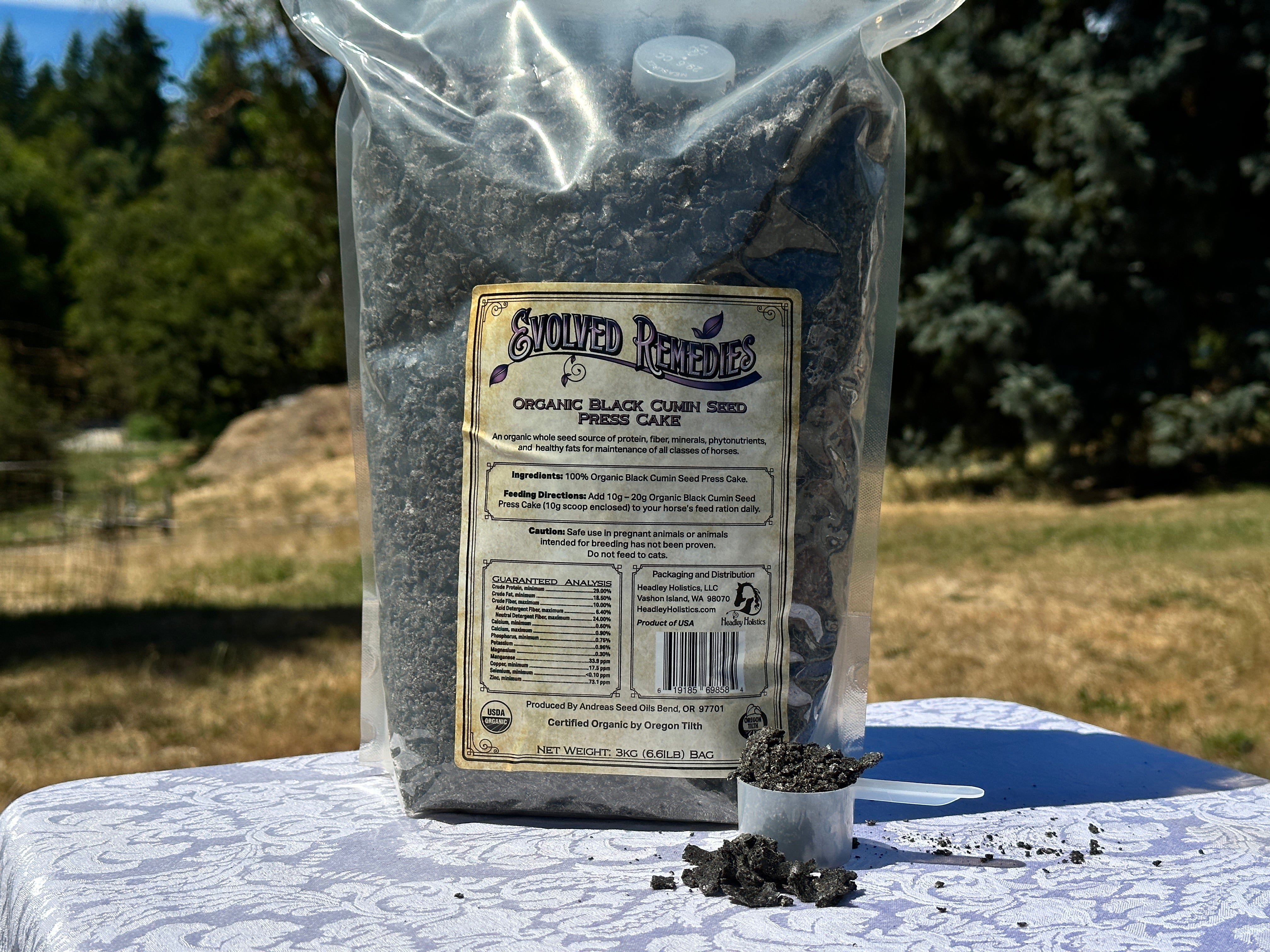
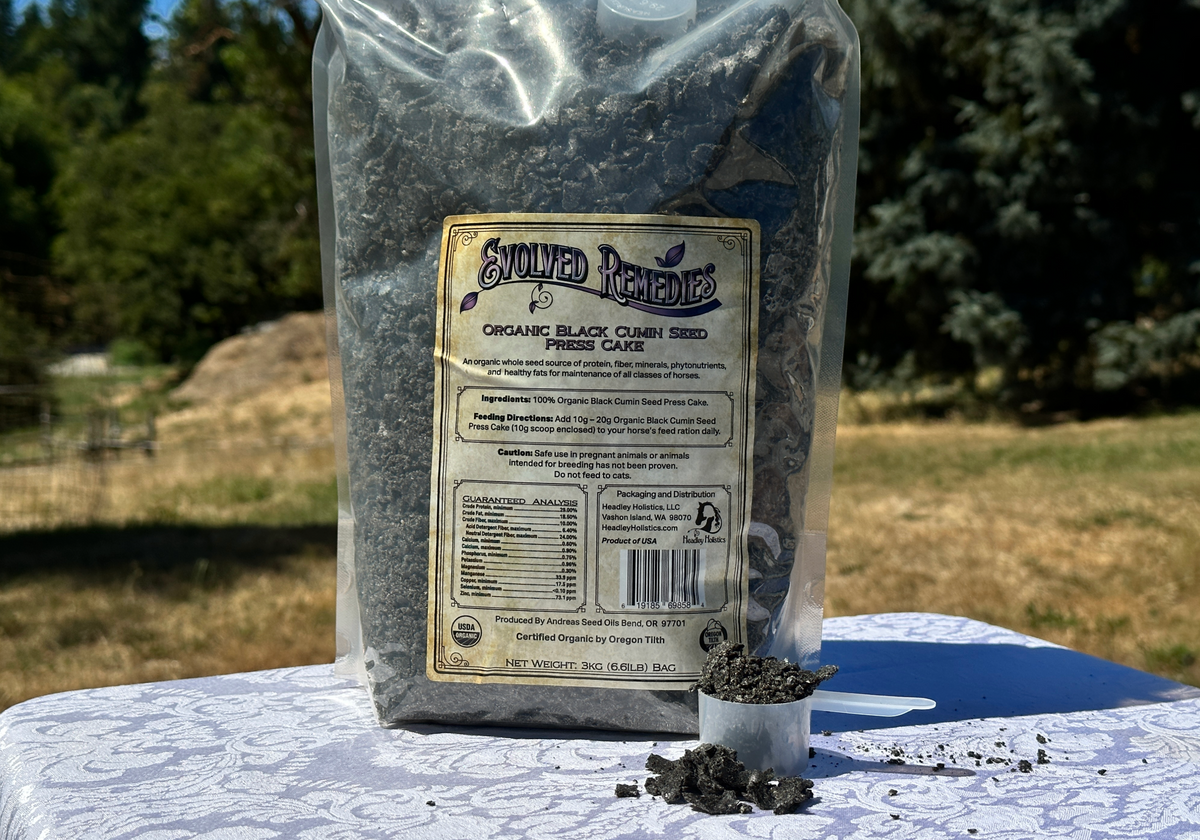
For an average 1,000-lb horse, an effective daily dose is about 30 grams (two 15-gram scoops) of Evolved Remedies Organic Black Cumin Seed Press Cake. For minis and ponies, about 15 grams a day is enough.
Simply mix it into your horse's normal daily feed. Most owners begin to see results — coat shine first, then fewer flies and calmer behavior — after a couple of months of consistent feeding.
Can you feed too much? Black cumin has a wide margin of safety, so the real risk of overfeeding is diminishing returns, not danger. Livestock research points to benefits at moderate inclusion and no added benefit — sometimes the opposite — at very high levels [11]. Stick to the recommended dose and your horse gets the full benefit economically.
Feeding more than just black cumin — or want exact scoop counts, how long each bag lasts, and which protocol fits your horse? Our complete seed-cake dosing guide for horses breaks it all down, product by product.
Is black cumin seed safe for horses?
Black cumin seed has a long track record of safe use and a wide margin of safety in toxicology research [12]. Fed at normal supplemental amounts, it is well tolerated.
Two sensible cautions. First, we advise against use in pregnant or nursing mares — not because we have seen a problem, but because that population has not been formally studied, and we do not make claims we can't stand behind. Check with your vet. Second, black cumin seed press cake is not suitable for cats, whose unique metabolism makes many plant compounds risky for them.
Does black cumin work for other animals?
Yes — the benefits are not horse-specific, because the mechanisms are simply chemistry and mammalian (and avian) biology. Black cumin is well studied as a supplement across species: it improves growth and immunity in cattle and calves [13], boosts milk yield and immune markers in goats and small ruminants [14][15], and supports growth, immunity, egg quality, and gut health in poultry [7][16]. Many of our customers use the same press cake for their dogs, too.
Why choose Headley Holistics black cumin seed press cake?
Headley Holistics is a family-owned holistic horse company — a mother-and-son business that grew out of our own family's wellness journey and evolved from a brick-and-mortar feed store into an organic, whole-food supplement brand. Our philosophy is simple: heal from the inside out, build health on a foundation of gut health, and choose real whole foods over synthetic isolates.
Here is what sets our black cumin seed press cake apart:
- Certified organic and 100% human-grade. Our press cake comes from a USDA-certified-organic operation that produces black cumin oil for human consumption — so what your horse eats is clean enough for people.
- Whole-food, not synthetic. You get the entire seed's nutrition in the natural, bioavailable forms a horse actually absorbs.
- One supplement, many benefits. Coat, skin, hooves, immune support, mild calming, and natural fly control from a single, clean ingredient — instead of a shelf full of one-off products.
- Honest, research-led education. We tell you what the science supports and where it doesn't. That honesty is the brand.
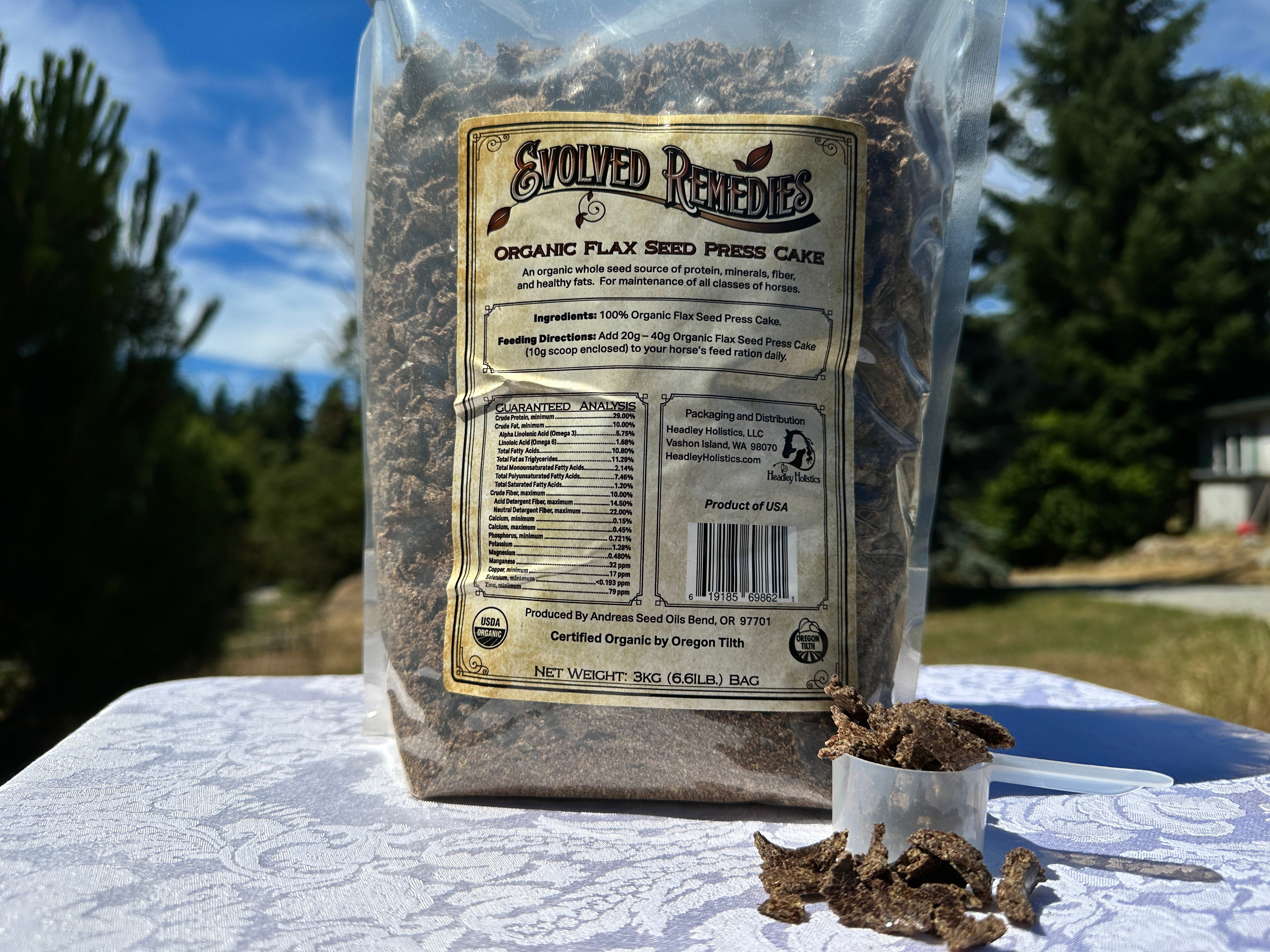
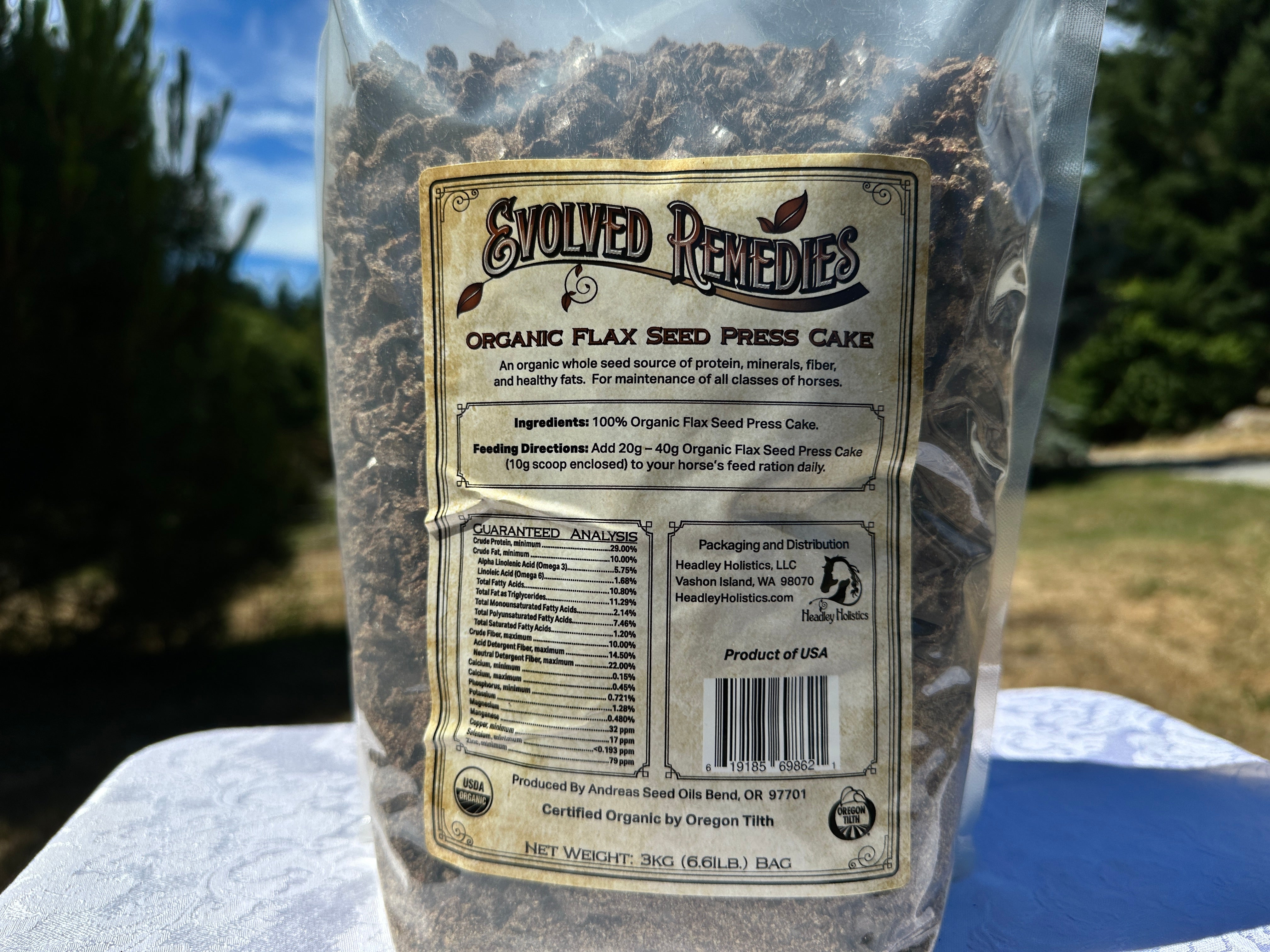
- Economical. One 3 kg bag delivers about 100 servings — over 3 months for an average horse.
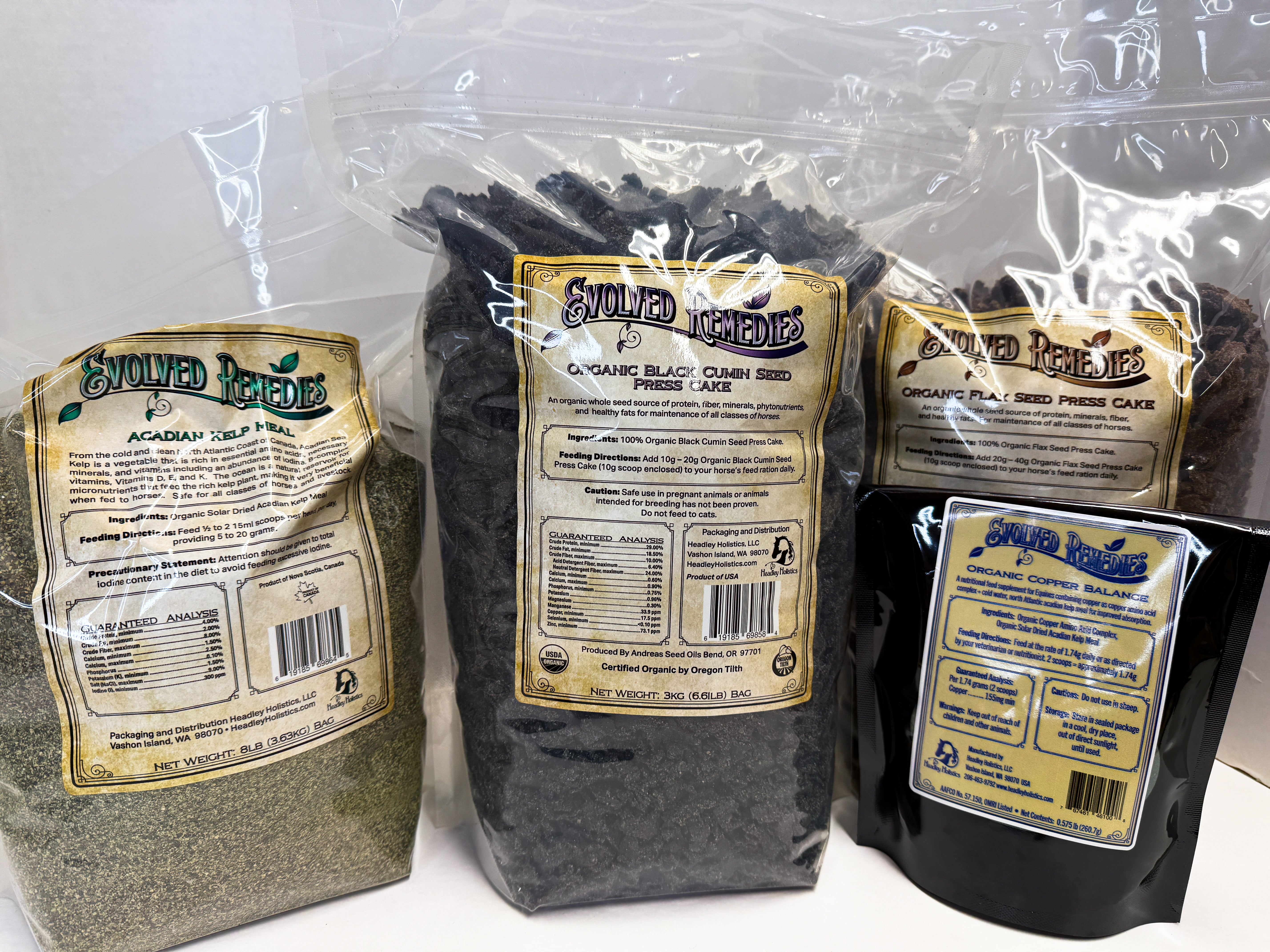
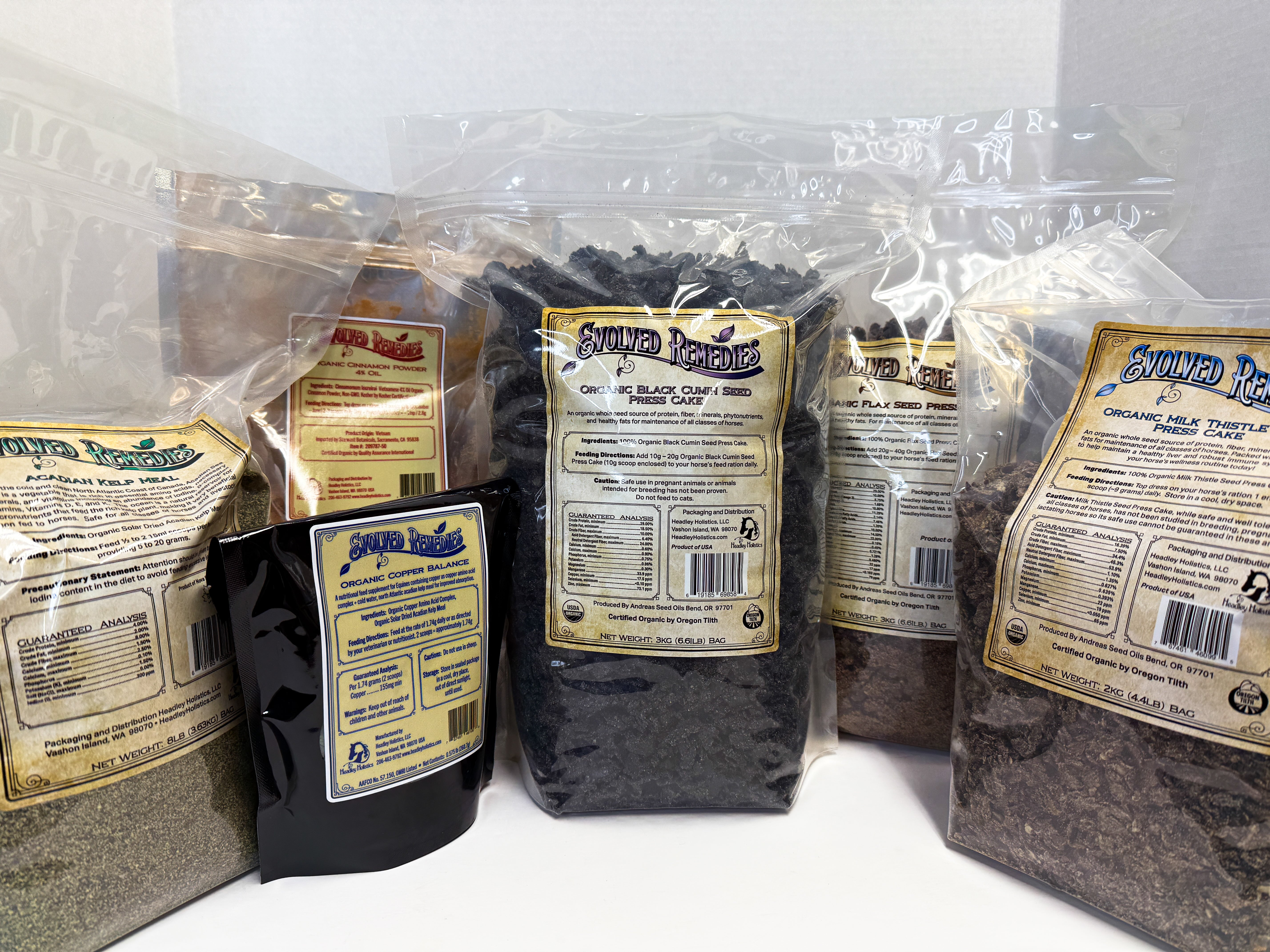
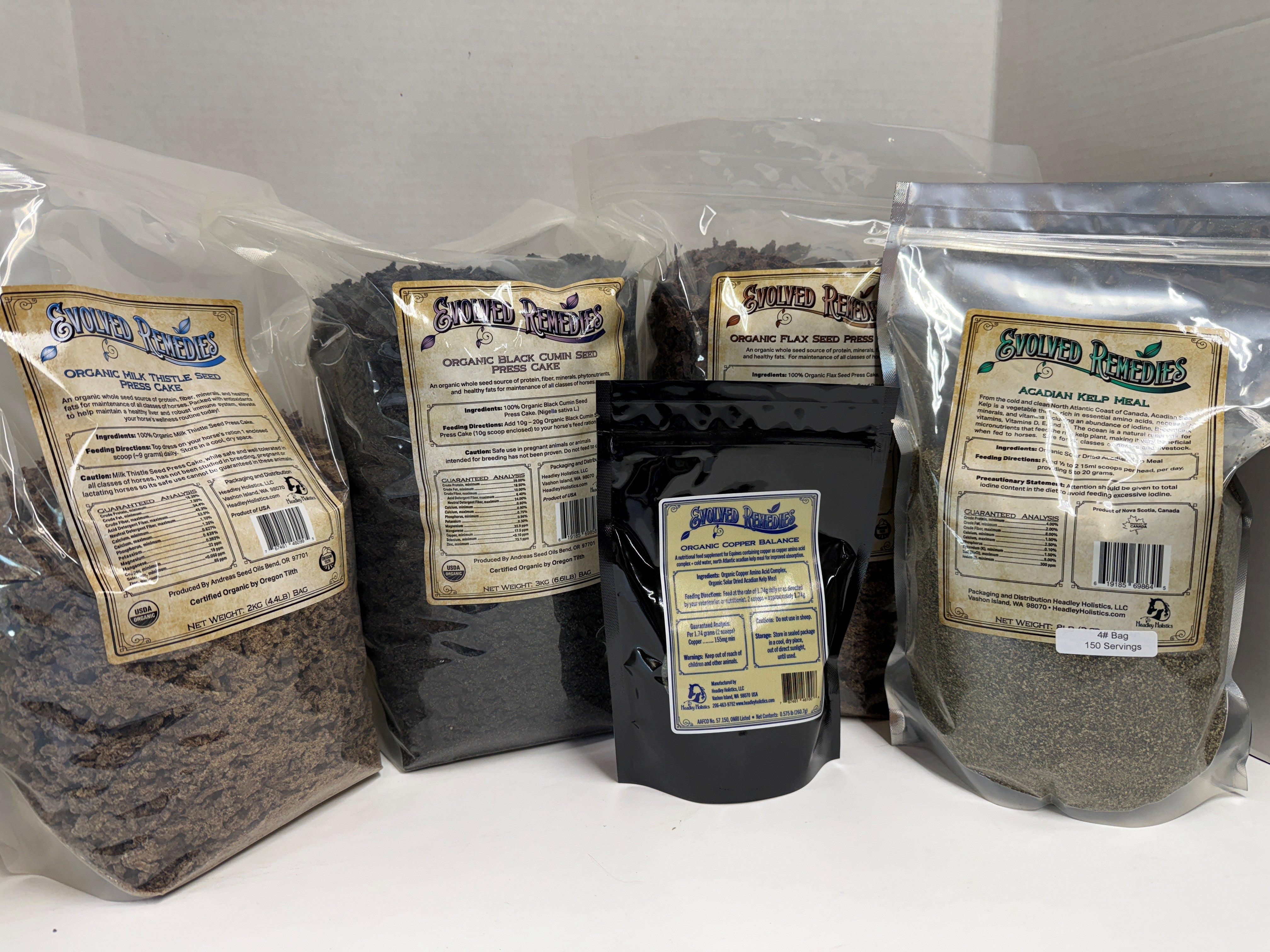
You can find our Organic Black Cumin Seed Press Cake here. And if you want black cumin working as part of a complete, forage-based program, it anchors several of our organic whole-food Evolved Remedies nutrition protocols — built for specific needs like metabolic support, joint and inflammation support, immune support, hoof health, and general wellness and longevity.
Ready to put this to work?
Start small with the 2-week sample, or go straight to the full-size press cake — first order ships free either way.
Shop the press cake →Frequently asked questions
What does black cumin seed do for horses?
It supports skin, coat, and hoof quality, immune function, and calm behavior, and works as a natural feed-through fly repellent — all from the phytonutrients thymoquinone, thymohydroquinone, and thymol.
Does black cumin seed really work as fly control for horses?
Yes. It works two ways: aromatic oils carried out through the coat make the horse less appealing to flies, and the same compounds pass into the manure to disrupt fly breeding [1][2]. Most owners notice fewer flies after a couple of months.
How long until I see results?
Usually a couple of months of daily feeding. Coat shine tends to show first, followed by fewer flies and calmer demeanor.
Is black cumin seed press cake better than black cumin seed oil for horses?
For horses, yes. Press cake delivers the whole seed — protein, fiber, minerals, and phytonutrients together — in an absorbable, economical, easy-to-feed form, rather than just the oil fraction.
How much black cumin do I feed my horse?
About 30 grams a day for an average 1,000-lb horse, or 15 grams for minis and ponies, mixed into normal feed.
For exact scoop counts on this and every other seed cake — plus how to build a complete protocol — see our full dosing and protocol guide.
Is black cumin seed safe for horses?
Yes, with a wide margin of safety at normal doses. Avoid use in pregnant or nursing mares (not yet studied), and do not feed it to cats.
Related reading
- How black cumin's feed-through fly control actually works, in depth: Natural Feed-Through Fly Control for Horses.
- Black cumin beyond horses — the research for sheep, goats, and cows: Harnessing Nature's Power.
- Why whole-food nutrition beats synthetic fortification: What Causes Laminitis in Horses.
- Exact feeding amounts for every seed cake, plus how to pick the right protocol: How Much Seed Cake to Feed Your Horse.
References
- Farag, S.M., et al., 2020, on the larvicidal activity of Nigella sativa constituents against fly larvae.
- Raj, G.A., et al., 2015, on larvicidal thymol and Nigella sativa essential oil.
- Showler, A.T., & Saelao, P., 2016, "Repellency to ticks (Acari: Ixodidae) of extracts of Nigella sativa," Experimental and Applied Acarology.
- Al-Hoshani, N., et al., 2023, "Assessment of Repellency and Acaricidal Potential of Nigella sativa Essential Oil Using Rhipicephalus microplus Ticks."
- Leesombun, A., et al., 2022, "Insecticidal Activity of Plectranthus amboinicus Essential Oil against the Stable Fly and the Horse Fly Tabanus megalops," Insects.
- Verdú, J.R., et al., 2023, "Nontoxic effects of thymol, carvacrol, cinnamaldehyde, and garlic oil on dung beetles," PLOS ONE.
- Khan, S.H., et al., 2013, "Effects of black cumin seed (Nigella sativa L.) on performance and immune system in newly evolved crossbred laying hens," Veterinary Quarterly.
- Chakravarty, N., 1993, on nigellone and histamine release, Annals of Allergy.
- Gilhotra, N., & Dhingra, D., 2011, "Thymoquinone produced antianxiety-like effects... via GABAergic pathway," Pharmacological Reports.
- Koshak, A., et al., 2017, randomized controlled trial of Nigella sativa in asthma.
- Sadarman, et al., 2021, "Effect of dietary black cumin seed on performance, immune status, and serum metabolites of small ruminants: A meta-analysis," Small Ruminant Research.
- Nigella sativa safety review, 2020, Asian Biomedicine.
- Elsayed, M., et al., 2025, "The supplementation of dietary black cumin (Nigella sativa) seeds... in pre-weaning calves," Tropical Animal Health and Production.
- El-Saadany, S.A., et al., 2008, on Nigella sativa supplementation and milk yield in lactating Zaraibi goats.
- Obeidat, B.S., 2020, "The inclusion of black cumin meal improves growth performance of growing Awassi lambs," Veterinary Sciences.
- Abdullah, F.K., et al., 2019, "Impact of Dietary Supplementation of Different Levels of Black Seeds on Broiler Chickens," International Journal of Poultry Science.



%20is%20a%20whole...)
1 comment
My 9 year old quarter horse has a very thin coat making her a bug deli so the black cumin seed cakes peaked my interest. Question, she is fed a ration balancer along with forage (grass and hay). Will this product overload her mineral/vitamin intake being on a ration balancer?
JoAnne Hudson
Leave a comment
This site is protected by hCaptcha and the hCaptcha Privacy Policy and Terms of Service apply.