
Evolved Remedies Acadian Kelp Meal
Tax excluded. Shipping calculated at checkout
Cold Water, North Atlantic Acadian Kelp Meal from Evolved Remedies
Information At-A-Glance
- Holistic alternative to expensive, manufactured and commercial vitamin/mineral products
- 60+ minerals, 12+ vitamins and full range of amino acids
- May boost effectiveness of other supplements
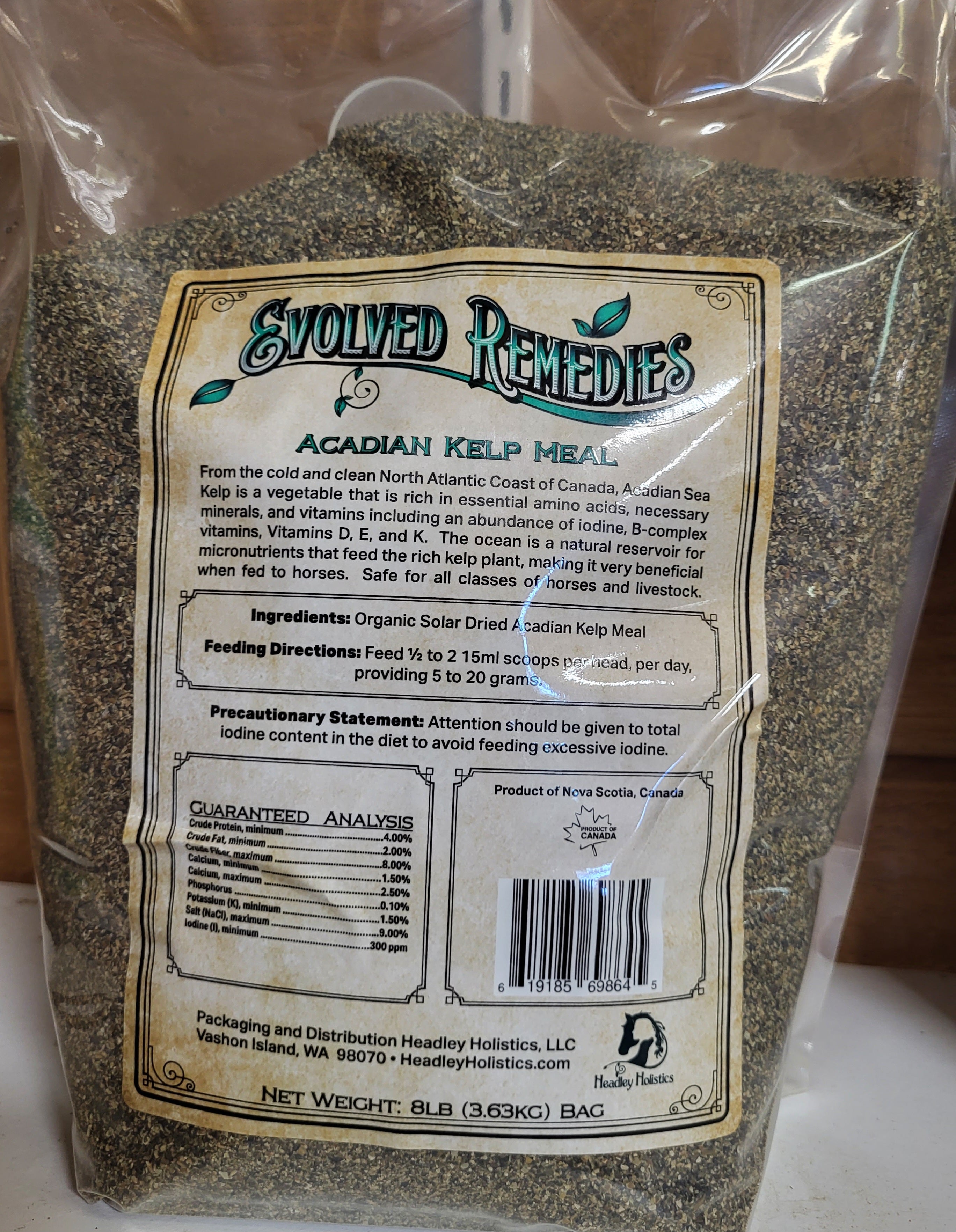
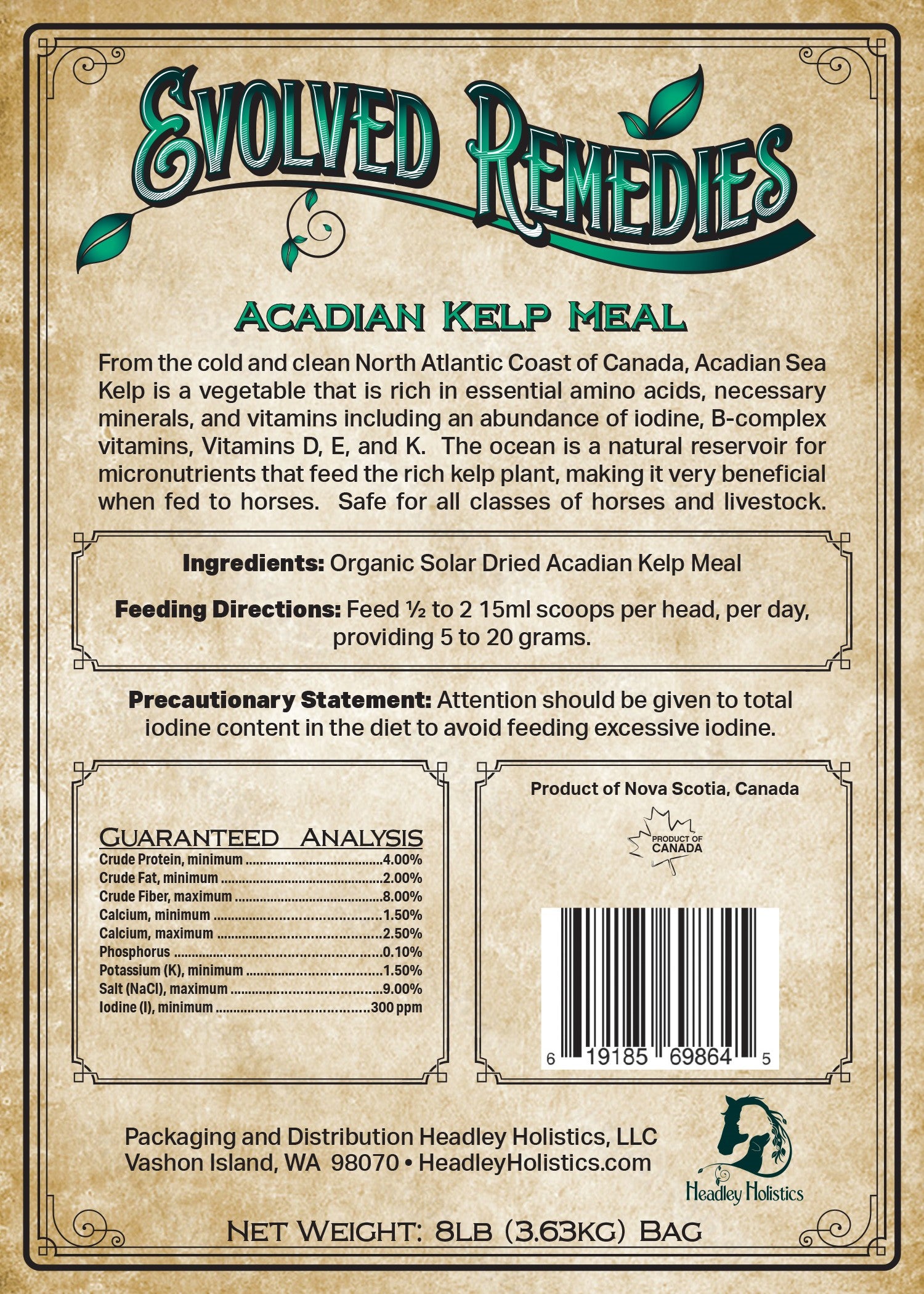
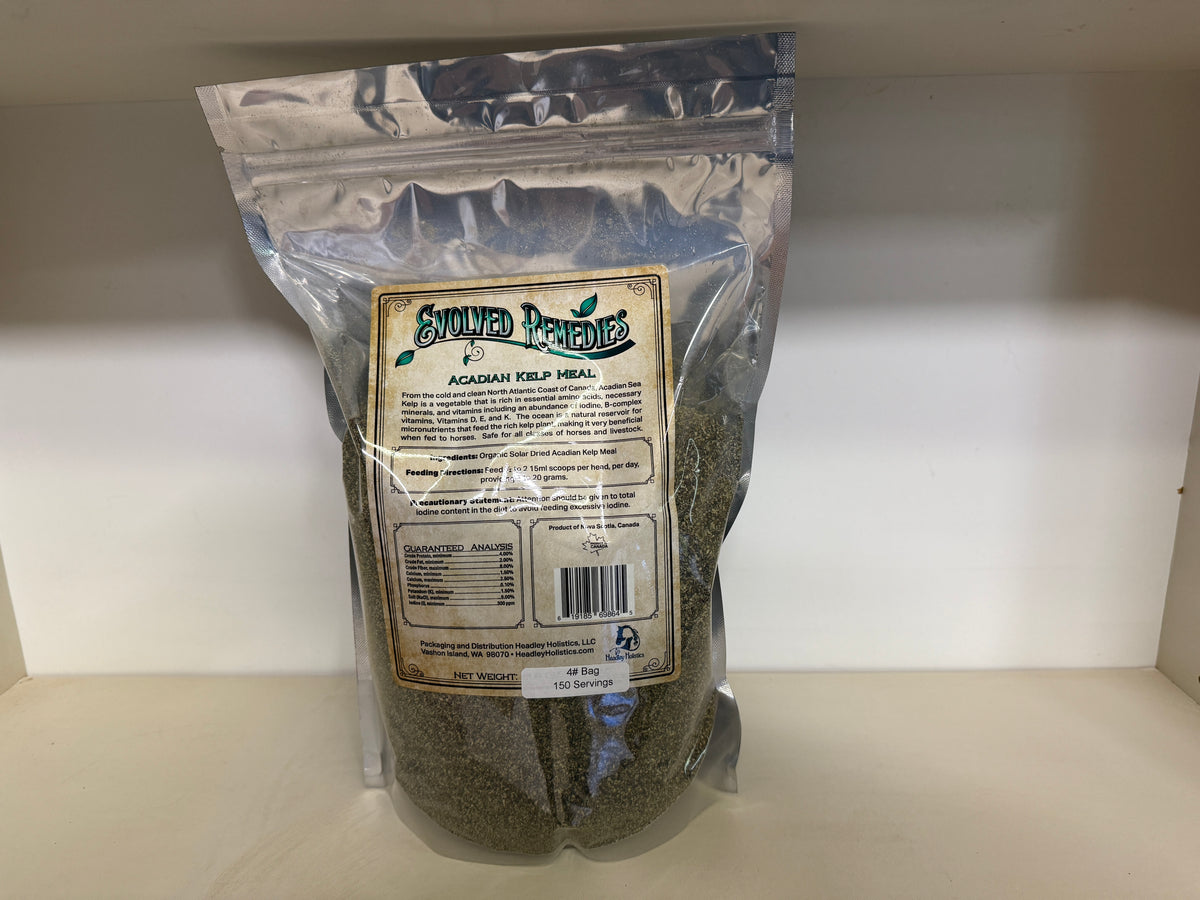
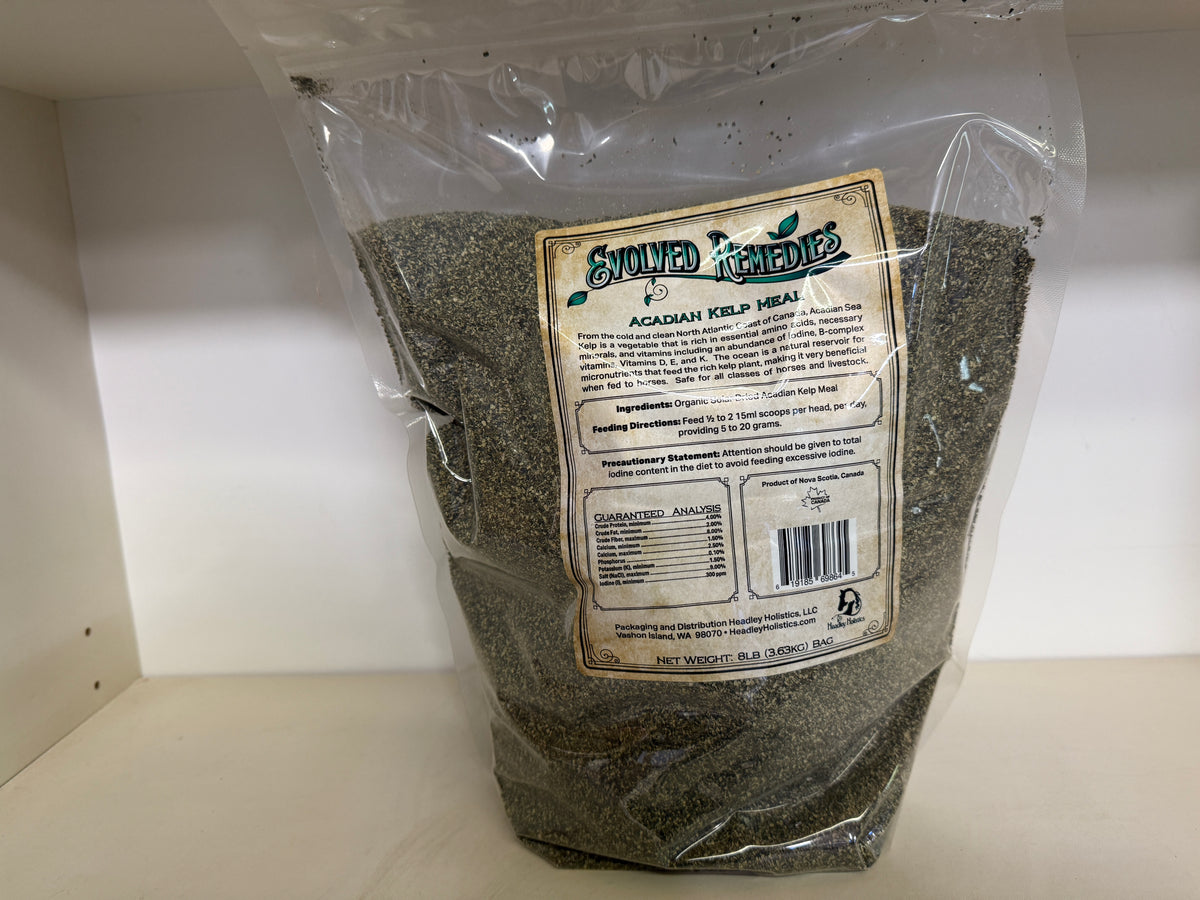
Norwegian Kelp is a brown seaweed which grows along the North Atlantic shorelines of Canada and Europe. Acadian Kelp is harvested off the cold, clean nutrient-rich coast of Nova Scotia, Canada. It is harvested under rigorous quality control standards to preserve the maximum benefits of the live seaweed. After harvest it is then ground or milled to various mesh sizes for specific feeding requirements. This form of Kelp has been used for centuries as a natural source feed supplement, and is a chief source of nutrients for horses, providing over 60 minerals and elements, more than 12 vitamins, including carotene, tocopherol and folic acid; valuable carbohydrates including Alginic acid, Laminarin and Mannitol, as well as a full range of amino acids. 8# Bag.
Ingredients: 100% organic, solar dried Acadian Kelp Meal.
Feeding Directions: Feed 1/2 to 2 15ml scoops (enclosed) per head, per day, providing 5 to 20 grams/day.
Looking for a complete regimen? See how Acadian Kelp Meal works inside our targeted nutrition protocols — everything your horse needs, in one box. →
Choose options
Blog posts

Seed Cakes for Horses: How Much to Feed and Which One Your Horse Needs
For an average-sized horse, the recommended daily doses are about 2 scoops (~30 g) of Black Cumin Seed Press Cake, 2–4 scoops (~60–120 g) of Flax Seed Press Cake, and 1 scoop (~14–15 g) of Milk Thi...
Read more
Black Cumin Seed for Horses: Benefits, Research, and How to Feed It
Black cumin seed (Nigella sativa) is a whole-food superfood supplement for horses, valued for improving skin, coat, and hoof quality, supporting the immune system, offering a mild calming effect, a...
Read more
What Causes Laminitis in Horses? The Hidden Trigger Most Owners Overlook
Most laminitis in horses is not really a hoof problem — it is a metabolic one, driven by high insulin from sugar and starch. But the gut sits upstream of insulin and mineral balance, and a growing ...
Read more