
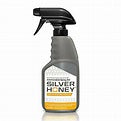
Silver Honey Rapid Wound Repair
Tax excluded. Shipping calculated at checkout
Silver Honey™ Rapid Wound Repair
Powerful, natural & fast-acting horse wound care
The first product to combine the natural power of Manuka Honey and MicroSilver™ BG, Silver Honey Rapid Wound Repair is equine wound care that’s tough on bacteria but gentle on skin. Its revolutionary formula moisturizes the treatment area as it heals and is proven to stop 99.9% of bacteria immediately to start healing faster. It also protects the skin’s natural microbiome, so your horses, ponies and animal companions heal quickly and comfortably. Effective on cuts, abrasions, sores, rain rot, rashes, fungus, scratches, sweet itch, wounds and burns.
- Made with natural, medical-grade active ingredients
- Proven to stop 99.9% of bacteria immediately to start healing faster
- Provides natural debridement of wounds to shed dead tissue and promote new tissue growth
- A great multi-species solution, providing natural wound care for chickens, horses, cats, dogs and other household pets like rabbits.
- Natural neem oil repels insects
- pH balanced and free of hypochlorous acid
- Won’t disrupt skin’s natural microbiome
8 fl oz Spray Gel--Designed to stay in place, Silver Honey spray gel provides continuous coverage to the wound. Its touch-free application is ideal for treating large areas of skin.
Choose options
Blog posts

Seed Cakes for Horses: How Much to Feed and Which One Your Horse Needs
For an average-sized horse, the recommended daily doses are about 2 scoops (~30 g) of Black Cumin Seed Press Cake, 2–4 scoops (~60–120 g) of Flax Seed Press Cake, and 1 scoop (~14–15 g) of Milk Thi...
Read more
Black Cumin Seed for Horses: Benefits, Research, and How to Feed It
Black cumin seed (Nigella sativa) is a whole-food superfood supplement for horses, valued for improving skin, coat, and hoof quality, supporting the immune system, offering a mild calming effect, a...
Read more
What Causes Laminitis in Horses? The Hidden Trigger Most Owners Overlook
Most laminitis in horses is not really a hoof problem — it is a metabolic one, driven by high insulin from sugar and starch. But the gut sits upstream of insulin and mineral balance, and a growing ...
Read more